
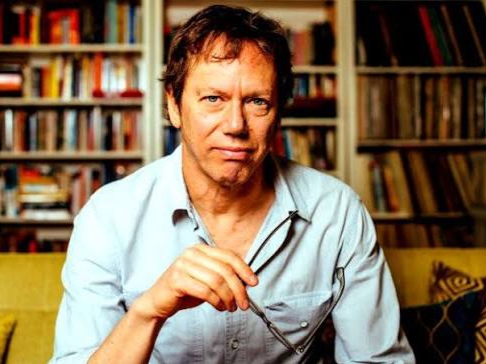
Robert Greene while drawing inspiration from Machiavelli wrote a one of a kind book on Power and Influence; The 48 Laws of Power.
Many termed the book to be evil while Greene defended himself by claiming that he was just being a realist.
So what’s Power?
Borrowing the English dictionary definition, we can define power as the ability to influence outcomes, resources or behaviours of others.
Those in psychology defines it as a drive to control or dominate, often seen as a mean to compensate for concealed insecurities and inferiorities.
From the definitions then we get to know that Power can be both Overt or Covert. The overt can be seen in the Political Arena and the Controlling Boss or Parent. The covert form can be seen in the child fake crying to get his Parents attention or an adult (There are a bunch of them) seeking sympathy and attention through whining and Complaining.
Back to Robert Greene, Greene claims that Power is Amoral ie; It’s Neither good or bad but depends on how it’s used.
Greene’s assertions closely resemble those of Carl Jung, the famous Swiss psychiatrist who categorized power into two forms;
1. The healthy Creative form which can be used for the good of humanity eg; The art. It comes from genuine talent and ability.
2. The ego- Toxic power Which is oftenly loud and boomy to Conceal deeply buried inferior feelings. It’s a form of controlling and dominating not out of desire for legitimate outcomes but to put others down for instance; Inferior, dependent, Powerless, helpless etc.
Let’s now Focus on the ego toxic form of power.
Researchers show that individual who win an argument ( which is a form of power) experience stimulation in the parts of the brain associated with rewards. Ie; The pleasure that comes from Controlling and dominating activates the same part of the brain that gets activated when one takes drugs like nicotine.
Activation of the reward system comes with a corresponding decline in regions associated with empathy and compassion.
This is what leads to addiction to power. The constant need to relive the highs that are associated with previous experiences.
They say power corrupts and absolute power corrupts and Greene knew this when he urged his readers to know when to stop.
According to Greene, Power or success can be a great peril due to the overconfidence and arrogance that may arise from such moments and even push you past the mark you had aimed for hence the risk of making more enemies
” Do not allow success to go to your head. There is no substitute for strategy and careful planning. Set a goal, and when you reach it, stop.”
We all want some form of power whether it’s political, Marketing, Corporate, Communicative or even behavioural. We all want to influence other people either: the Boss, Kids, Romantic partners, Voters, Customers or an enemy.
But power especially the political one is a bit addictive that once it get hold of you , you lose control and may even grow overconfident and arrogance hence making more enemies.
Beware of the addictive nature that comes with any form of Power.
Two cockerels fought on a dungheap. One cockerel was the stronger: he vanquished the other and drove him from the dungheap. All the hens gathered around the cockerel, and began to laud him. The cockerel wanted his strength and glory to be known in the next yard. He flew on top of the barn, flapped his wings, and crowed in a load voice: “Look at me, all of you. I am a victorious cockerel. No other cockerel in the world has such strength as I. ” The cockerel had not finished, when an eagle killed him, seized him in his claws, and carried him to his nest.”
FABLES. LEO TOLSIOY.